Thursday, February 13, 2020

Wednesday, February 12, 2020
Tuesday, February 11, 2020

Monday, February 10, 2020
Top 10 Weird Oscars Nominations
10. Rin Tin Tin

9. Your Face

8. King Kong (1976)

7. Moscow Strikes Back

6. Dancer in The Dark

5. Jonathan Livingston Seagull

4. Scared Straight!

3. Mondo Cane

2. Rejected

1. Bill & Coo

Award: Best Actor (Reportedly Won but Declared Ineligible)
How must it have felt for every other performer that the first performer to win Best Actor looked for awhile like it wouldn’t even go to a human? In fact, though Rin Tin Tin was said to have won the popular vote that would have won him Best Actor in 1928, in fact it would have been a pack of dogs that won the award instead of any individual canine, as the main dog was bred like mad and very heavily doubled like most animal performers. It would be interesting if something like this happened today and we say the actors of today trying for roles where they had to simulate a pack of dogs, though I’m sure we’d see more movies like The Grey then.
9. Your Face
Award: Best Animated Short(Nominated)
It’s not so much that it’s bizarre that such a film got an 1988 Oscar nomination. It’s bizarre that it was even made. Bill Plympton’s first commercially released short (one of two Oscar nods he got) is about a man crooning a song entitled “Your Face” while sitting in a chair. For almost the entire film, he remains static except for his head. But that part is the furthest thing from static. It twists, rolls away, disintegrates, melts, pops, etc. Either you can get into the spirit of the animation, in which case it’s one of the trippiest things you’ll ever see, or you won’t and you’ll wonder how something so technically threadbare got so much as a second screening. Two final notes: Bill Plympton was sure that the movie would bomb when it was first screened since he was showing it to an audience of industry professionals and he’d just made this silly experiment and the other note is that the music featured in it is not a man singing but Plympton’s long time collaborator Maureen McElhorn with her voice slowed down so that Plympton wouldn’t have to hire a male singer.
8. King Kong (1976)
Award: Best Visual Effects (Won)
The production of this remake of King Kong was plagued with problems, most of them the fault of producer Dino De Laurentiis. His decision to have Kong rendered as a giant robot instead of the stop motion figure that the original had utilized resulted in a number of comically embarrassing errors. Probably the most notable was when the the hydraulics on the thing (which cost $2 million dollars just to build) malfunctioned in such a way that “fluid was trickling down it’s hairly leg” which of course prompted people to claim the monster had peed itself. To the rescue came Hollywood makeup expert Rick Baker, who both made the suit which substituted for the monster for almost the whole movie and played Kong. But Laurentiis’s reputation was at this point so married to the idea that the mechanical Kong was the only one in the film that Baker wasn’t credited for playing Kong, even though the suit use was nominated for an Academy Award! Even big time reviewers for the movie like Vincent Canby for the New York Times wrote their reviews clearly under the impression it was all a robot. It’s not often that a human being is passed off as a robot outside of films like Real Steel, so even if Baker hadn’t won seven awards of his own, that surely would have been eligibile to be nominated for “most unique oscar for a human being to be nominated for” on it’s own.
7. Moscow Strikes Back
Award: Best Documentary (Won)
Moscow Strikes Back is a 1942 Soviet propaganda film about the defeat of the 1941 Nazi invasion, specifically when the Wehrmacht was stopped from taking Moscow. What’s strange about this win is that, while of course the Soviet Union had just joined the Allies against the Third Reich the year before, it was hardly something the U.S. and Britain had entered into willingly, and of course there were plenty of American anti-Nazi propaganda films to award instead (four of them were nominated, after all.) On top of that, the narration by Edward G. Robinson, as noted by critic Phil Hall, seems to be weirdly making fun of the action on screen. A scene in peacetime Moscow of a dancing festival is called “Mongolian Jive” and that sort of thing. Less of a joke was how in the aftermath of the war when the Red Scare kicked in, Moscow Strikes Back was a film used by the House on Un-American Activities to blacklist him and other persons involved for taking part in a project sympathetic to communism.
6. Dancer in The Dark
Award: Best Song (Nom.)
Many times on programs like The Simpsons and in films the unnatural nature of musical numbers and the awkward nature of transitioning back to more natural acting has been lampshaded. “I’ve Seen It All” in Lars Von Trier’s controversial Dancer in The Dark raises that awkwardness to daring new heights. While Bjork’s voice when she sang in English back then was always an acquired taste and the movie’s tone and content made it clear it wasn’t meant to be a conventional slick musical, the meter and cadence of their singing voices is clearly dreadful. It’s a feeling reinforced by the moments of lush orchestral accompaniment, and however intentional the effect, it’s still quite awful, especially for something that was considered for the 2001 Academy Awards. Of course the song was completely overshadowed in the popular press by her infamous swan dress, but this piece really is much tackier than any dress could manage.
5. Jonathan Livingston Seagull
Award: Best Editing (Nominated)
An adaptation of a novella by Richard Bach, Jonathan Livingston Seagull manages to be both one of the weirdest and most formulaic movies of the 1970s. The formula is in the plot line: an outsider among seagulls doesn’t want to eat the garbage everyone else is any more, gets thrown out of the community, questions the nature of reality, and ends up leading his own flock. It’s like Milo and Otis meets the early part of Battlefield Earth. The weirdness is that it’s a live action film where shots of seagulls flying, standing around, and eating garbage overlaid with voiceover are supposed to represent characterization and storytelling. The film was not a commercial success when released in 1973, was critically savaged (Roger Ebert claimed to have left barely a third of the way into it) and both author and musician Neil Diamond sued producer/director Hall Bartlett for misuse of their material. Given how poorly done some shots of superimposed seagulls are and how haphazardly scenes such as the one above are edited as well, lord knows why anyone thought this movie needed that pity nomination (We concede that it’s a gorgeously shot movie, though, so that other nomination makes sense.)
4. Scared Straight!
Award: Best Documentary Feature (Won)
For those unfamiliar with the Scared Straight Program, it’s where delinquents are taken to a prison and threatened by prison inmates. What I just wrote almost completely comprises the action in Scared Straight! the 1978 film. Shot in less than an afternoon on one location, it looks much more cheapjack that a news segment from the time on the same topic would be. With the brief interviews of the kids that get told they’ll be sexually assaulted if they go to prisons at the beginning and end, it actually looks more like an episode of the later reality television series. Probably the Academy felt it was more “socially conscious” to give it an award or they were taken aback at the sight of adults threatening to take out the eyes of children. The rotten cherry atop this cardboard sundae is that, in fact, the Scared Straight program was statistically shown to not work. At all.
3. Mondo Cane
Award: Best Song (Nominated)
Mondo Cane (Dog’s World) is a 1962 film about novelty sights from around the world of a shocking nature. Upscale restaurants serve the sort of food people would have been dared to eat on Fear Factor, animals are slaughtered (these scenes were staged and the deaths were real), an artist uses human “brushes” for a few paintings. As you might imagine, for the time period it was quite a shocking film. But that didn’t stop it’s main musial piece, “More”, from being nominated for an Academy Award. On top of that, it actually was covered by singers like Frank Sinatra and Nat King Cole. It’s really hard to imagine something like that happening today, like if Adele did a cover of a song from Jackass.
2. Rejected
Award: Best Animated Short (Nominated)
You know those youtube cartoon clips where the joke is that some character curses at another or bleeds a lot and it all seems juvenile and half-assed? Don Hertzfeld’s Rejected is about 5% more sophisticated than those on a technical level and maybe 15% more on a conceptual level, with the main difference being that he shot on 35 MM film instead of using Adobe flash software. The premise of this 2000 film composed mostly of crudely drawn humanoids in white voids is that some animator made a series of the worst cartoons ever and sent them to various companies as pilots for animated shows, and in the end the cartoon environments collapse because the rejection drove the cartoonist insane. Supposedly a big part of the movie’s appeal is that the characters say quotable non sequiturs such as “MY ANUS IS BLEEDING!” or scenes like ticks flying out a character’s nipples. It’s enough to make you think that for one nomination the Academy of Motion Picture Arts and Sciences mixed up an entry with the MTV Movie Awards.
1. Bill & Coo
Award: Honorary (Won)
Who would have thought coming into this that there would be more than one movie in here composed almost entirely of footage of birds? Bill and Coo has the birds (parakeets this time) living in a miniature town called Chirpendale and being menaced by a crow. This time all the voiceovers consist of Ken Murray describing the emotions the characters are supposed to feeling, which makes their oblivious expressions slightly more tolerable than in Jonathan Livingston Seagull. Instead of just being screened to Ken Murray’s bewildered and troubled friends and family like you would have expected to happen with a film that had that premise, this one netted an honorary 1948 Oscar with the citation “In which artistry and patience blended in a novel and entertaining use of the medium of motion pictures.” It’s not often that an award is said to be given on the basis of “what you did must have been annoying, frustrated, and have took forever, so we feel sorry enough for you to give you an award.”
Saturday, February 8, 2020
Top 10 Dance Crazes
10. Chicken Dance


9. The Hustle


8. The Twist


7. The Macarena


6. Breakdancing (a.k.a. B-boying)


5. The Charleston


4. Limbo


3. Tango


2. Waltz

1. Hokey Pokey
Originally known as the “Duck Dance”, the tune for this dance was written in the late 1950s by a Swiss accordion player named Werner Thomas during the time he was tending a flock of ducks. It later emigrated to the United States in the 1970s, when New York publisher Stanley Mills acquired the U.S. publishing rights. Mills focused considerable time and energy selling the song, which began to grow in popularity in the 1980s. By the late 1990s, he was licensing the tune for use on dance compilation CDs, karaoke collections and TV commercials for Burger King and the Chicken Dance was here to stay.
Today it the dance is still featured at weddings and other events, guaranteed to get both talented and untalented dancers out on the floor, since everyone looks equally silly doing it.
9. The Hustle
This 1970s line dance craze began with the introduction of a song by Van McCoy and the Soul City Symphony called “The Hustle“. The dance rocketed to international fame after it got the spotlight in the 1977 movie sensation “Saturday Night Fever”. With its simple choreography of forward, backward, sided-to side movements and toe taps,
The Hustle retains cult popularity today and is still a popular form of party entertainment.
8. The Twist
The rock n’ roll dance craze of the early 1960’s came from an African-American plantation dance of the 1890s, called “wringin and twistin”. The pelvic movements and foot shuffles can be traced back to dances from West Africa. The Twist (both song and dance) gained notoriety when Chubby Checker performed it live to a national audience on August 6, 1960, on the Dick Clark Show.
The song hit number one on the singles chart in the USA in 1960, and again in 1962, and the dance enjoyed equal amounts of immense popularity with young people and disapproval from critics who thought it was too provocative.
7. The Macarena

The Macarena, a Spanish song about a woman of the same name, was first introduced by Los Del Rio, but became a worldwide pop sensation in the mid-1990s after it was remixed by the Bayside Boys, who added English lyrics. The song spent 14 weeks at the top of the U.S. Billboard Hot 100 singles chart, one of the longest runs ever. At the time it was played at events of all shapes and sizes, including sports events, conventions, rallies, and weddings.
The accompanying dance was supposedly created by a Venezuelan Flamenco dance teacher for her dance classes, and later gained worldwide popularity, which it retains to this day, to the general amusement (or remorse) of many.
6. Breakdancing (a.k.a. B-boying)
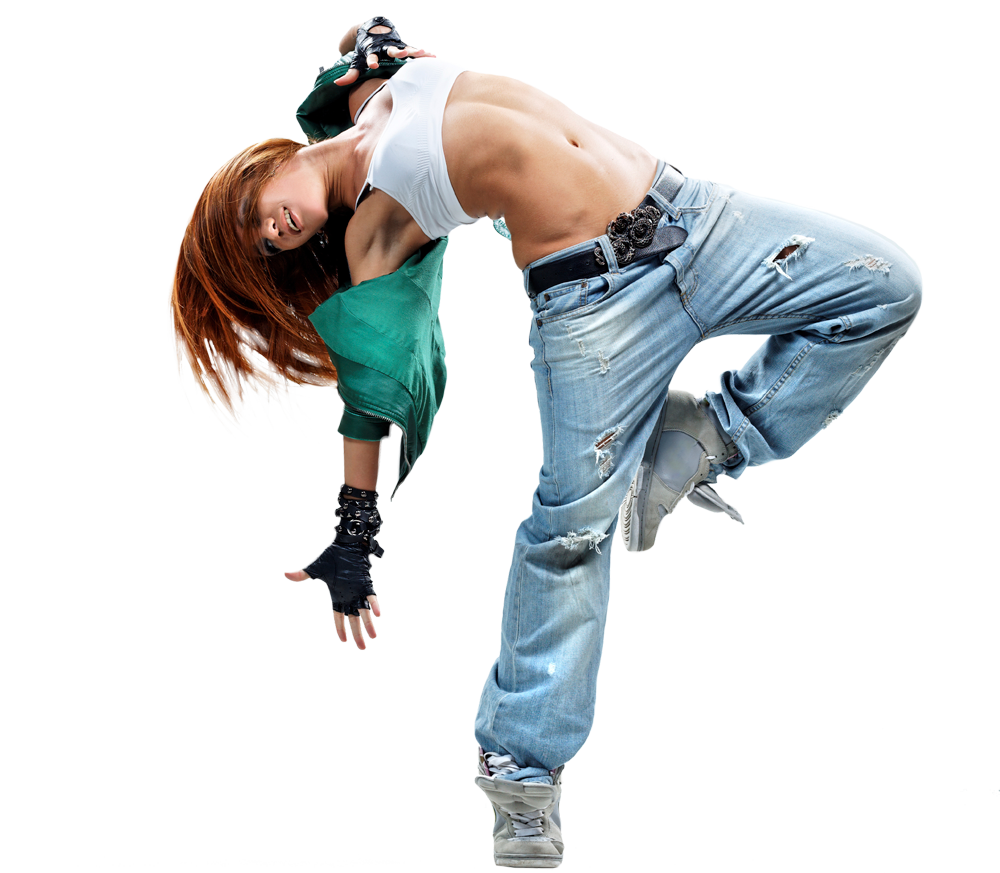
A popular form of street dancing that began in the 1970s among African-American and Latino cultures in New York City. Breaking is usually danced to hip-hop music, which is often remixed to prolong the musical breaks. Dancers perform in informal dance competitions known as battles, either as individuals, or in groups (crews), trying to outperform each other with a series of complicated and innovative dance moves. The dance displays showcase athleticism and
ingenuity, as dancers perform complex acrobatic maneuvers and hold gravity-defying poses.
5. The Charleston
The 1923 tune called “The Charleston”, named after Charleston, South Carolina, was composed by James P. Johnson for the Broadway show “Runnin’ Wild” and dramatically changed the course of dance history during the Prohibition Era. Although the dance was developed in African-American communities before the film’s release, it is most often associated with white flappers. During parties held at underground speakeasies, the young women used the dance, which was considered to be quite shocking and immoral, as a way of mocking the “drys”, or those who looked down on drinking.

The dance is performed to ragtime jazz music, with lively steps and kicks.
4. Limbo
Part game, part dance, Limbo originated on the island of Trinidad, in the West Indies. Performed to Caribbean music, dancers move one by one under a horizontal pole that is gradually lowered, competing to see who is the most flexible and adept. Players are considered “out” if they touch the pole or fall backward. The word limbo derives from a West Indian English word, “limber”, which is a type of cart shaft that moved to and fro. The dance was originally a funeral dance, and is similar to the African legba or legua. Some believe that the dance is a portrayal of slaves as they were led down into the ships, with no escape possible no matter how they twisted and bent.
However, most people more readily associate it as an icebreaker technique used to entertain tourists on resort vacations, or as a party game.
3. Tango
The roots of the sultry and sensuous Tango can be traced back to the working-class port neighborhoods of Buenos Aires, Argentina and Montevideo, Uruguay. The dance contains elements of Cuban, Uruguayan and African dances, influenced by African rhythms and European music. Although its present day forms developed in Argentina and Uruguay, there are earlier written records of the dance from Spain and Cuba. The dance hit its peak of popularity when introduced in 20th Century Paris,

later spreading to the rest of Europe, and the United States. As the dance became wildly popular in upper and middle classes around the world, Argentinian high society finally deigned to adopt it as well.
2. Waltz
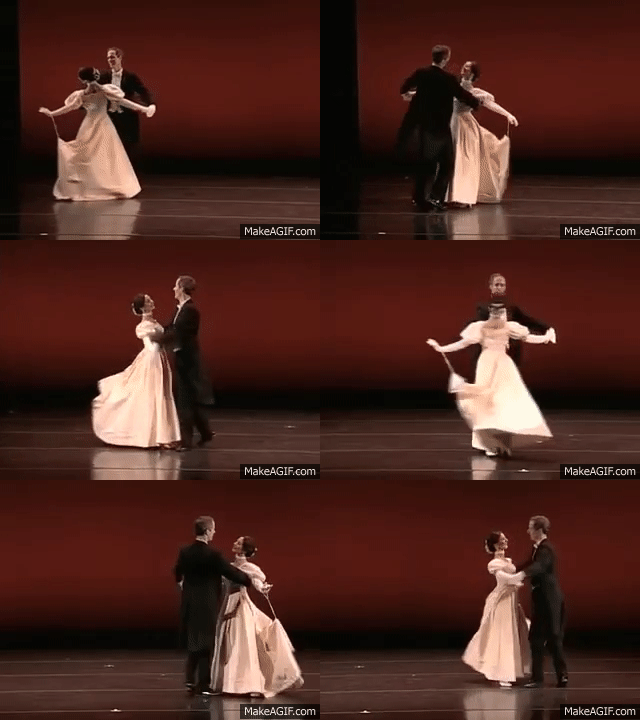
While Bavarian 18th Century noblemen were dancing stately court dances for entertainment, their peasant counterparts were swirling around in what was then regarded as a very risque form of dance. More than one bored nobleman snuck off into the night to party with the servants and explore this new form of dance where the partners were allowed to touch one another, much to the chagrin of church leaders of the time. The waltz gained popularity in Vienna in the 1780s before becoming fashionable in other parts of Europe, such as France and Britain, although it was still considered “riotous and indecent” in the 1825 version of the Oxford English Dictionary.
The waltz is still practiced worldwide and is an integral part of ballroom dance.
1. Hokey Pokey
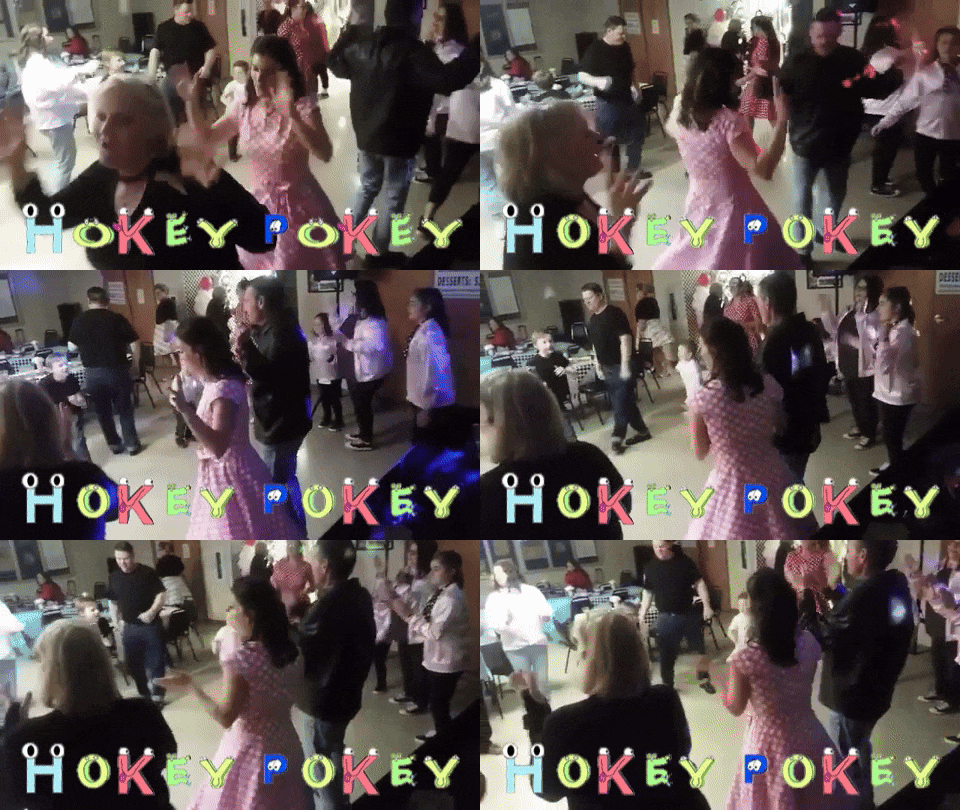
Is the Hokey Pokey what it’s really all about? Either way, the origins of the song and its dance are somewhat hazy. It gained popularity in ski clubs in Sun Valley, Idaho in the 1940s, where it was featured as apres-ski entertainment, but several people claim authorship. It was originally recorded by the Ram Trio, but the copyright was unclear and resulted in a battle between Larry LaPrise and British songwriter Jimmy Kennedy.
(It was settled out of court with LaPrise awarded the copyright). Regardless of ownership, the Hokey Pokey has become an entity unto itself, and is practiced by children of all ages all over the world.
Thursday, February 6, 2020

Subscribe to:
Posts (Atom)
